Introduction
Unlocking the World of Photography for Young Minds
Photography has become an integral part of our lives, especially in today’s digital age. It allows us to capture moments, express creativity, and share experiences with others. Introducing photography to a 13-year-old can have numerous benefits and open doors to a whole new world of self-expression and visual storytelling.
The Power of Visual Storytelling
Introducing photography at a young age fosters creativity and enhances communication skills. Through capturing images, young individuals learn to convey emotions, tell stories, and share unique perspectives on the world around them. Photography encourages observation, critical thinking, and attention to detail as they strive to capture the essence of a moment.
Benefits of Introducing Photography to a 13-Year-Old
Fostering Creativity and Self-Expression
Photography offers a creative outlet for teenagers, allowing them to explore their own unique style and perspective. By experimenting with different compositions, lighting techniques, and subjects, they can develop their artistic voice while expressing themselves authentically.
Developing Visual Literacy Skills
Learning photography equips young minds with valuable visual literacy skills. They become adept at analyzing images – understanding how elements such as color, composition, and lighting contribute to the overall message conveyed by a photograph. This skill extends beyond photography itself; it enhances their ability to interpret visuals in various contexts like advertisements or media.
Choosing the Right Digital Camera for a Young Beginner
When choosing a digital camera for a 13-year-old beginner photographer, it’s crucial to consider user-friendly features that make the learning process seamless. Look for cameras with intuitive menus and controls that are easy to navigate, allowing young photographers to focus on capturing stunning images.
Young photographers often explore various environments, indoors and outdoors. Opting for a camera with a durable build quality can ensure it withstands the occasional bumps and knocks it may encounter. Additionally, considering a compact design makes it easier for them to handle comfortably, especially given their smaller hands.
Understanding the Basics of Digital Cameras

Explaining Key Camera Components
The lens, image sensor, and processor are essential components of a digital camera. The lens captures light and focuses it onto the image sensor.
It determines factors like zoom capabilities, aperture size for controlling depth of field, and overall image quality. The image sensor is responsible for converting light into a digital signal, forming the basis of the final image.
Different cameras have varying sensor sizes, such as full-frame or APS-C sensors, affecting low-light performance and dynamic range. The processor takes data from the image sensor and processes it to produce the final image file.
Different Types of Cameras
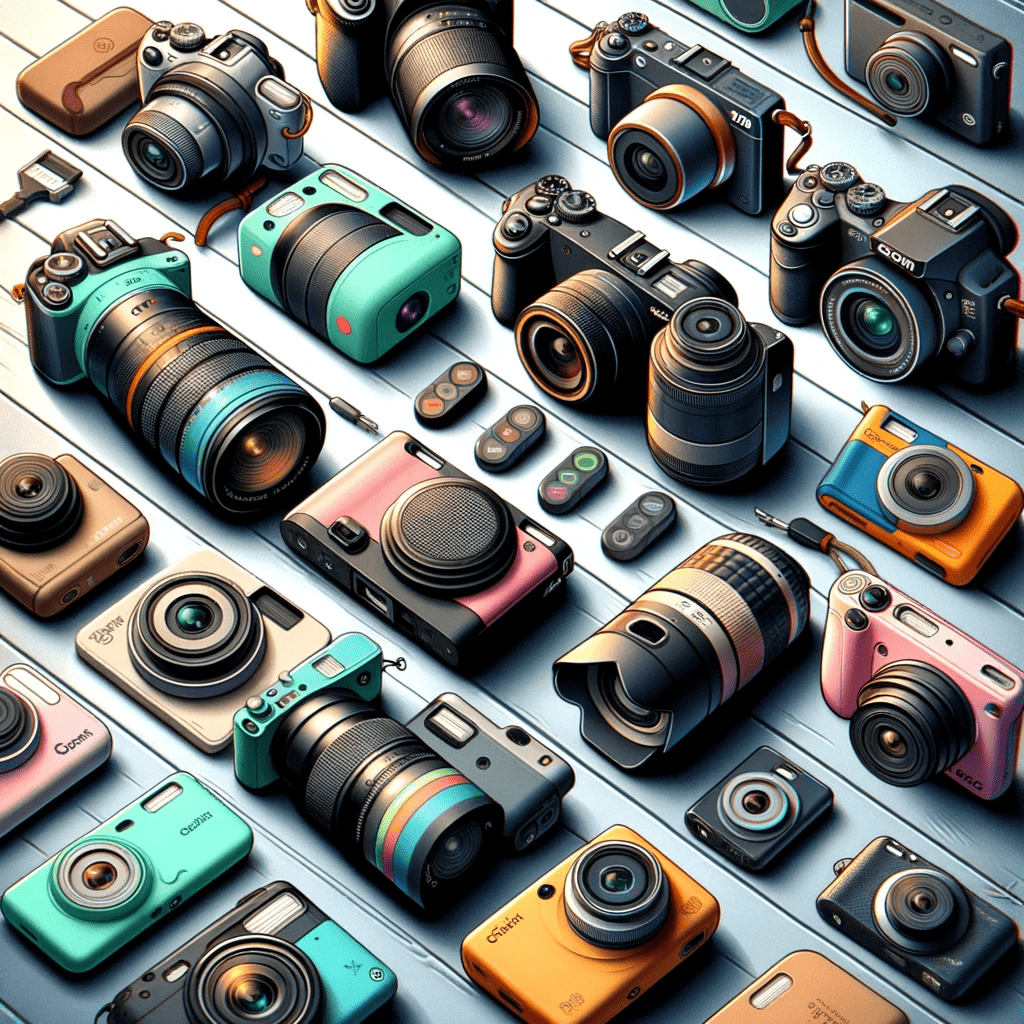
Point-and-shoot cameras are compact and user-friendly, usually offering automatic modes with minimal manual control. They are portable and great for casual photography but may lack advanced features found in other types.
Mirrorless cameras have interchangeable lenses like DSLRs but lack an optical viewfinder – instead using electronic viewfinders or rear LCD screens for composition. They offer excellent image quality in a more compact form factor compared to DSLRs.
DSLRs (Digital Single-Lens Reflex) have optical viewfinders that allow direct viewing through the lens via a mirror system. They offer extensive manual controls, excellent performance in various conditions, and compatibility with a wide range of lenses.
Advantages and Disadvantages
Point-and-shoot cameras are convenient due to their small size but might not provide as much control or versatility as mirrorless or DSLR counterparts. Mirrorless cameras offer superior portability while maintaining good image quality but may have shorter battery life compared to DSLRs due to electronic viewfinder usage. DSLRs provide exceptional image quality with precise control over settings but can be bulkier and heavier than other options.
Factors to Consider When Choosing a Camera for a 13-Year-Old
Budget considerations and price ranges
Considering the budget is essential when choosing a camera for a 13-year-old. Determine how much you are willing to invest in their photography journey. Research various camera models within your price range to ensure you find one that meets both your financial constraints and the desired features for an aspiring young photographer.
Durability and build quality for young users
Look for cameras that are built with durability in mind, as 13-year-olds may not always handle them with utmost care. Opt for cameras designed with robust construction using quality materials, ensuring they can withstand accidental drops or rough handling.
Weather sealing and shock resistance features
Consider cameras that offer weather sealing and shock resistance features. These aspects protect the camera from dust, moisture, and sudden impacts, making it more suitable for outdoor adventures or unpredictable environments.
Ergonomics and ease of use for smaller hands
Choose a camera with good ergonomics specifically designed to fit comfortably in smaller hands. Ensure that buttons and controls are well-placed so that a 13-year-old can easily operate the camera without struggling or feeling overwhelmed by complex menus.
Megapixel count and image quality capabilities
Pay attention to the megapixel count of the camera as it directly affects image resolution. Higher megapixels allow for more detailed prints or cropping flexibility without significant loss of quality.
However, keep in mind that megapixels aren’t the sole factor determining image quality; other factors like lens quality, sensor size, and image processing also play crucial roles. Remember to evaluate each of these factors when selecting a digital camera suitable for a 13-year-old’s needs and abilities.
Recommended Digital Cameras for 13-Year-Olds
Point-and-Shoot Cameras
The Canon PowerShot G7 X Mark II is a compact camera that offers advanced features for young beginners. Its small size makes it easy to carry around, perfect for capturing moments on the go. The camera boasts a 20.1-megapixel sensor, allowing for high-resolution images with excellent detail.
It also has a wide aperture range (f/1.8-f/2.8), enabling great low-light performance and beautiful background blur effects. With its tilting touchscreen, the G7 X Mark II offers intuitive control and easy access to settings.
Another excellent option is the Sony Cyber-shot DSC-WX500, which provides versatile zoom capabilities and Wi-Fi connectivity. The camera features a 30x optical zoom lens, allowing users to capture distant subjects with clarity and precision.
With built-in Wi-Fi, it enables seamless sharing of photos and videos directly from the camera to smartphones or social media platforms. The DSC-WX500’s compact size and user-friendly interface make it an ideal choice for young photographers seeking convenience without compromising image quality.
Mirrorless Cameras
If your budding photographer wants to explore beyond point-and-shoot cameras, consider the Fujifilm X-A7 mirrorless camera. Designed with lightweight portability in mind, it features a 24.2-megapixel APS-C sensor that delivers impressive image quality even in challenging lighting conditions. The X-A7 also incorporates advanced autofocus technology for fast and accurate subject tracking, ensuring sharp images every time.
Its user-friendly interface includes a large touchscreen display that can be tilted for shooting at various angles. For those interested in video capabilities, the Panasonic Lumix DMC-G7 is an excellent choice among mirrorless cameras.
It offers exceptional video recording capabilities at 4K resolution, allowing young filmmakers to capture their creative ideas in stunning detail. The Lumix DMC-G7 also features interchangeable lenses, offering versatility and room for growth as your young photographer progresses.
With its ergonomic design and intuitive controls, this camera provides a comfortable shooting experience while encouraging exploration of different photography techniques. Remember to consider the specific needs and preferences of your 13-year-old when deciding on the best digital camera.
Tips on Using the Camera Effectively
Understanding Exposure Settings (aperture, shutter speed, ISO)
1. Aperture: Adjust the size of the camera’s aperture to control the amount of light entering the lens. A wider aperture (lower f-number) allows more light and creates a shallow depth of field, resulting in a blurred background and a focused subject. A narrower aperture (higher f-number) lets in less light but increases depth of field.
2. Shutter Speed: Control how long the camera’s shutter remains open to capture an image. Faster shutter speeds freeze motion, while slower ones create motion blur.
For handheld shots, aim for a minimum shutter speed equal to or faster than the focal length of your lens to avoid camera shake. 3. ISO: Adjust the camera’s sensitivity to light by changing its ISO setting.
Lower ISO values produce sharper images with less noise but require more ambient light or longer exposure times. Higher ISO values allow capturing images in low-light conditions but may introduce digital noise.
Composition Techniques (rule of thirds, leading lines)
1. Rule of Thirds: Mentally divide your image into nine equal parts using two horizontal and two vertical lines forming a grid. Position key elements along these lines or at their intersections for more balanced and visually appealing compositions.
2. Leading Lines: Utilize natural or man-made lines within your frame that guide viewers’ eyes toward the main subject or create depth in your composition. Leading lines can be roads, fences, rivers, or any other element that directs attention and enhances visual interest.
Post-processing Options Using Editing Software
1. Importing Files: Transfer photos from your camera to computer using software provided by the camera manufacturer or third-party applications like Adobe Lightroom. 2. Basic Adjustments: Fine-tune exposure, contrast, highlights/shadows, and white balance to enhance the overall look of your images.
3. Cropping and Straightening: Remove distractions or improve composition by cropping unwanted elements or straightening tilted horizons. 4. Color Correction: Adjust color saturation, temperature, and tint to achieve desired color balance.
5. Sharpening and Noise Reduction: Enhance image details with sharpening tools while reducing noise using noise reduction filters to achieve a cleaner final result. 6. Creative Effects: Experiment with various artistic effects like black-and-white conversion, vignetting, or adding filters to add unique touches to your images.
Remember that practice and experimentation are key to mastering these techniques. Embrace the learning process and let your creativity flow while using the camera effectively and exploring the possibilities offered by post-processing software.
Accessories to Enhance the Photography Experience
Camera Bags
Camera bags are essential for protecting the camera and its accessories while on the go. A reliable camera bag ensures that everything stays safe, organized, and easily accessible.
Look for a bag with padded compartments to keep the camera body, lenses, and other items secure. The bag should also have adjustable dividers to accommodate different equipment sizes.
Additional pockets and compartments are useful for storing memory cards, batteries, lens filters, and cleaning supplies. Opt for a bag made of durable material with water-resistant properties to safeguard against unexpected weather conditions.
Conclusion
Finding the best digital camera for a 13-year-old is an exciting journey that opens up a world of creativity and self-expression through photography. By considering factors like budget, durability, and image quality capabilities, you can make an informed decision when selecting a suitable camera. The recommended cameras mentioned in this guide offer excellent options for young beginners.
Remember to explore various accessories like camera bags to enhance your photography experience further. Photography allows individuals to capture precious moments and unleash their artistic side while developing patience and attention to detail.
Encouraging young minds to embrace photography at an early age can lead to lifelong hobbies or even future careers in this field of creative expression. So grab your camera, unleash your creativity, and capture memories that will last a lifetime!